
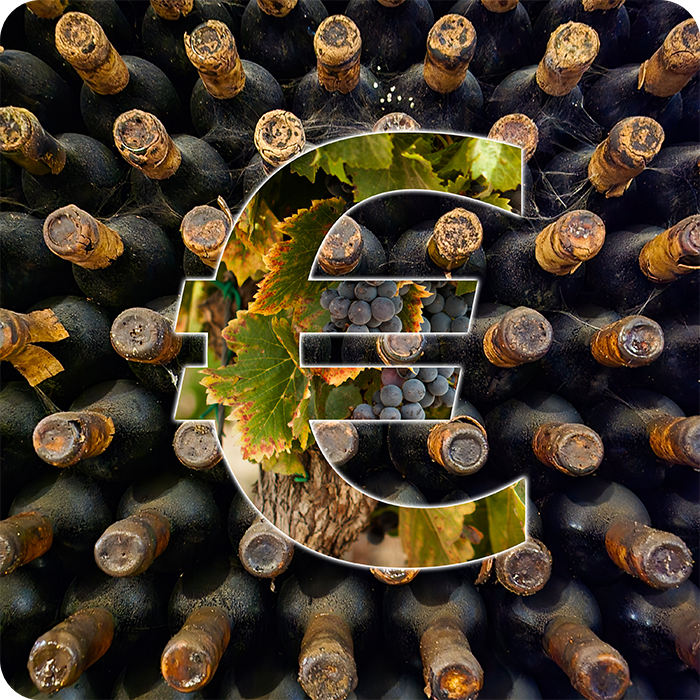
The European wine sector — responsible for 60% of global wine production — entered a new regulatory era on 4 December 2025, when the European Council and Parliament reached a provisional agreement known as the EU Wine Package. This agreement aims to help the wine sector adapt to a rapidly changing landscape shaped by climate pressures, shifting consumer preferences, geopolitical uncertainty, and evolving trade dynamics.
From climate investment funding to new definitions for reduced-alcohol wines, the measures aim to strengthen the long-term competitiveness of European wine while helping ensure market stability.
Below is a simplified overview of the key measures — and what they mean for wineries, including how wineries stand to benefit from EU funding.
Alignment of production and demand
Excess vines can be removed with support from the new grubbing-up schemes. These schemes are supported by EU funding with up to 25% of each member state’s globally available funding being made available for wine distillation and green harvesting. Ultimately, the goal is to maintain market stability, support innovation, and prevent oversupply, but in practical terms wineries should be looking to see which parts of their operations can take advantage of this E.U. support.
Another change is that the planting authorisation scheme will now operate on a 10-year revision period, meaning the framework governing new vineyard plantings will continue.
For producers, this measure is designed to ensure that vineyard expansion remains aligned with market demand. Oversupply has periodically placed pressure on wine prices in several regions, and policymakers aim to avoid structural imbalances that could destabilise the sector.
Strengthening Climate Resilience
Climate change remains one of the most significant long-term threats facing European wine production. Increasingly unpredictable weather patterns, prolonged droughts, and extreme temperature events are already affecting vineyard yields and grape quality across several regions.
Under the Wine Package, EU Member States will have access to increased funding for climate-related investments. Wineries are advised to take note that co-financing may reach up to 80% of eligible investments, covering both mitigation measures and adaptation strategies.
These investments may include vineyard irrigation systems, improved water management, frost protection technologies, and other infrastructure designed to help vineyards adapt to changing environmental conditions.
Combating plant diseases
The spread of vineyard diseases such as flavescence dorée is an increasing concern across parts of Europe.
To strengthen the sector’s ability to respond, the Wine Package includes additional support for monitoring, diagnostics, training, and research aimed at preventing and controlling plant disease outbreaks. The E.U. has agreed to support wineries by covering up to 80% of eligible costs.
Improved coordination between Member States and stronger diagnostic capabilities could help reduce long-term risks to vineyard productivity and protect regional wine ecosystems.
Simplified, harmonised labelling
New labelling requirements were introduced with Regulation (EU) 2021/2117 and individual EU state requirements are implemented across the EU.
The Wine Package aims to simplify compliance by introducing a harmonised framework for digital labels and pictograms, standardised across Member States.
For wineries, this approach reduces the burden of managing different national requirements, such as the Italian recycling requirements, while still ensuring consumers receive clear information about ingredients, allergens, and nutritional values.
Digital labels delivered via QR codes will get a yet to be developed EU harmonized symbol for wine labels to simplify regulatory requirements for wineries.
Wine tourism
Wine tourism has become an increasingly important revenue stream for many European wine regions, particularly in rural areas where vineyards play a central role in local economies.
The Wine Package allows EU funding to support initiatives that develop wine tourism infrastructure and experiences, helping producers diversify income sources and strengthen regional tourism ecosystems. Up to 60% of the cost of promotional campaigns will be covered by the EU.
These investments could include tasting facilities, visitor centres, vineyard tours, and other initiatives that connect consumers more directly with wine producers and their regions.
Export flexibility
To help European wines remain competitive in global markets, the new framework introduces greater flexibility for wines produced exclusively for export outside the EU.
These wines will be exempt from the requirement to include ingredient lists and nutritional declarations, which are mandatory for wines sold within the EU market.
For exporters, this measure helps avoid unnecessary regulatory burdens when producing wines for markets where these disclosures are not required. Despite this generous provision, wineries may still choose to use the same labeling for other markets by taking advantage of regionally dynamic content served with QR codes. This can minimize regional customizations on wine labels to save costs and lower logistical complexity of preparing wine labels across EU and non-EU markets.
Reduced- and no-alcohol wines
Consumer demand for lower-alcohol alternatives continues to grow globally, and the Wine Package introduces clearer definitions for these categories.
The new classification establishes the following thresholds:
- 0.0% wine: less than 0.05% ABV
- Alcohol-free wine: between 0.05% and 0.5% ABV
- Reduced-alcohol wine: above 0.5% ABV, but at least 30% lower than standard strength
These definitions aim to create greater clarity for producers, regulators, and consumers as innovation in lower-alcohol wine products accelerates.
Aromatised wine products
To encourage product innovation, the Wine Package allows rosé wine to be used as a base for regional aromatised wine products.
This change provides producers with greater flexibility when developing new products that respond to evolving consumer tastes and emerging beverage categories.
The EU wine sector: preparing for the future
From climate resilience funding to clearer rules around labelling and alcohol classifications, the EU Wine Package aims to help wineries navigate a rapidly evolving market environment, supporting the EU wine industry with important funding options.
While further clarification may emerge through corrigenda, the direction is clear: the EU wine sector is preparing for a future shaped by sustainability, transparency, and innovation.
For a deeper discussion of the EU Wine Package and its implications for producers, you can watch this webinar with Ignacio Sánchez Recarte from CEEV.
Leave a Reply